


About the Project
The recognition and protection of victims' rights have significantly evolved within the European Union over the past decades. Today, a comprehensive legal and ethical framework seeks to ensure that victims of crime receive appropriate support, protection, and access to justice.
Children who become victims of crime require particular attention due to their heightened vulnerability. Research has consistently shown that justice systems may unintentionally cause additional harm when legal proceedings fail to adequately reflect children's rights, developmental needs, and best interests. Furthermore, legal professionals, including lawyers, often lack specialised training on communicating with and representing child victims.
Every child—including those belonging to particularly vulnerable groups such as children with disabilities, migrant children, or children living in poverty—must be treated with dignity, respect, and in a child-friendly manner. Children should also receive accessible information about their rights and about the legal procedures affecting them. Effective protection of child victims cannot be achieved without close cooperation between justice institutions, child protection services, and other relevant stakeholders.
Against this background, the FOSTER (Fostering Child-Friendly Legal Environments through Collaborative Networks) project seeks to strengthen child-friendly justice systems by creating a legal environment in which child victims receive effective support and protection throughout criminal proceedings.
The project pursues this objective by strengthening the capacities of legal professionals through specialised training programmes. More than 640 lawyers across the partner countries are being trained in child-friendly justice, victim-sensitive communication, and the rights of child victims. The project also develops practical guidance materials for lawyers and trainers while promoting sustainable cooperation among legal professionals, public authorities, child protection services, and civil society organisations.
Ultimately, FOSTER aims to contribute to a comprehensive child-friendly justice approach that safeguards the rights, dignity, and well-being of every child involved in criminal proceedings.
Project Partners
- Centre for European Constitutional Law (Greece)
- Society of Social Psychiatry P. Sakellaropoulos (Greece)
- Center for the Study of Democracy (Bulgaria)
- Institute of Criminology, Faculty of Law, University of Ljubljana (Slovenia)
- Institute for Legal Studies, Centre for Social Sciences (Hungary)
Project Duration
June 2024 – May 2026 (extended until July 2026)
Hungarian Research Team (ELTE Institute for Legal Studies, Centre for Social Sciences)
E-Learning Course
The FOSTER e-learning course has been developed for lawyers and other legal professionals interested in children's rights, child-friendly justice, and the protection of child victims of crime.
The approximately four-hour online course combines expert lectures, interactive exercises, quizzes, and practical case studies. It provides participants with comprehensive knowledge of the legal framework protecting child victims, child development and trauma, victim-sensitive communication, child-friendly interviewing techniques, multidisciplinary cooperation, and the practical application of child-friendly justice principles.
Designed as a flexible learning resource, the course allows participants to study at their own pace while developing practical skills that can be directly applied in their daily professional work.
Following registration, the course is available online through the project's dedicated learning platform in Greek, Bulgarian, Slovenian and Hungarian: https://cecl.edu.gr/login/index.php
Research Reports
Understanding the existing challenges faced by lawyers representing child victims was one of the project's key objectives.
To identify current legal practices, training needs, and areas requiring further professional development, each project partner conducted national research within its respective country. The findings were consolidated into national Training Needs Assessment (TNA) reports covering Bulgaria, Greece, Hungary, and Slovenia.
Training Needs Assessment Consolidated Report
These reports provide a detailed overview of the legal, institutional, and practical challenges surrounding child victims of crime and served as the foundation for the development of the project's training programme and educational materials.
Training Programme
One of the central activities of the FOSTER project was the organisation of a comprehensive training programme for legal professionals.
The training programme was designed to strengthen lawyers' capacity to effectively represent child victims of crime. Recognising the particular vulnerability of children involved in criminal proceedings, the programme focused not only on legal knowledge but also on the practical skills required for child-sensitive communication and trauma-informed legal practice.
Participants explored topics including children's rights, child development, trauma, communication with child victims, multidisciplinary cooperation, secondary victimisation, and child-friendly justice standards. Throughout the programme, theoretical sessions were complemented by practical exercises, case studies, interactive discussions, and group work.
More than one hundred participants successfully completed the Hungarian training programme, including practising lawyers, researchers, psychologists, child protection professionals, representatives of public institutions, and members of civil society organisations.
One of the programme's greatest strengths was its multidisciplinary character. Bringing together professionals from different sectors created a unique opportunity for dialogue and mutual learning—an aspect that participants repeatedly identified as one of the most valuable elements of the training.
Participant feedback was overwhelmingly positive. Attendees particularly appreciated the practice-oriented methodology, the use of real-life case studies, and the highly interactive learning environment. Many emphasised that the programme provided immediately applicable knowledge for their daily work while helping them better understand children's perspectives and the impact of trauma on legal proceedings.
The programme was particularly timely in the Hungarian context, where recent child protection cases have highlighted the importance of specialised professional knowledge and child-sensitive justice. Beyond providing new knowledge, the training created a safe professional space for discussing complex and often difficult issues related to child protection, which participants considered highly valuable.
The project also produced a comprehensive set of training materials, including:
- Practical Guide for Lawyers Working with Child Victims in Criminal Proceedings:
This guide transforms the knowledge, experiences, and lessons learned throughout the project into a structured professional resource.
While interactive training sessions encourage discussion and experiential learning, sustainable professional development also requires a solid conceptual framework. The guide therefore supports legal professionals in deepening their understanding of child-friendly justice beyond individual training activities.
It identifies the legal knowledge, practical competencies, and reflective skills required for lawyers to consistently apply European child-friendly justice standards in everyday legal practice.
-
Trainers' Guide for Capacity-Building Programmes on Child-Friendly Justice:
Drawing on the findings of the training needs assessment and the evaluation of the national training programmes, this guide offers practical recommendations for future training providers.
It addresses both the content and methodology of professional training, recognising that effective implementation of victims' rights depends not only on what is taught but also how it is taught.
The guide is intended to support future organisations and trainers delivering professional education for lawyers working with child victims by building upon the project's experiences, strengths, and lessons learned.
- Training Package for Trainers
- Training Package for Lawyers
Intersectoral networking guide for lawyers
The protection of child victims involved in criminal proceedings requires much more than the effective application of legal safeguards. It requires a coordinated, child-centred, and multidisciplinary response capable of addressing the complex and often interrelated legal, psychological, social, educational, health, and protection needs of every child. While lawyers play a fundamental role in safeguarding children’s rights, ensuring access to justice, and advocating for their best interests, meaningful protection cannot be achieved through legal representation alone.
The present Intersectoral Networking Guide for Lawyers has been developed as a practical resource to support legal professionals in building and sustaining effective collaborative relationships with stakeholders involved in child protection and child-friendly justice. The Guide aims to strengthen lawyers’ capacity to identify relevant actors, understand their roles and responsibilities, establish meaningful partnerships, navigate referral pathways, participate in multidisciplinary cooperation processes, and contribute actively to integrated responses that promote the rights, wellbeing, participation, and recovery of child victims.
Intersectoral Cooperation Framework for Supporting Child Victims of crime
Policy Paper
This policy paper examines how the rights of child victims of crime can be more effectively safeguarded within criminal proceedings. It pursues three related objectives: first, to set out the international and European legal framework that establishes minimum standards for the treatment of child victims; second, to distil from that framework a common core of principles that should underpin child-friendly criminal proceedings in any national context; and third, to examine how these principles are being applied in practice in Bulgaria, Greece, Hungary and Slovenia, drawing on direct evidence gathered from practitioners through the FOSTER project’s national and international roundtables.
Child Protection in Criminal Proceedings - Safeguarding the Rights of Child Victims of Crime
National Roundtable Discussions
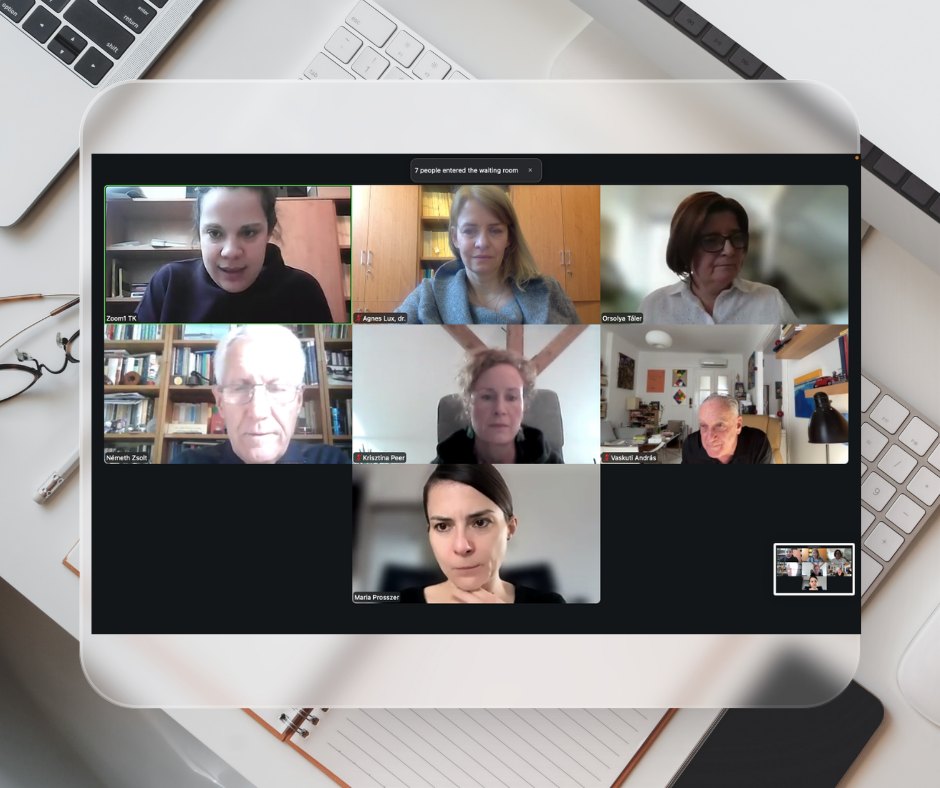
Throughout the FOSTER project, four national multidisciplinary roundtable discussions were organised in Hungary to foster dialogue among professionals working with child victims across different sectors.
The roundtables brought together lawyers, judges, prosecutors, psychologists, criminologists, police officers, healthcare professionals, child protection experts, researchers, and representatives of civil society organisations. Their shared objective was to identify the practical challenges faced by professionals working with child victims and to explore possible solutions for strengthening child-friendly justice.
Discussions highlighted that, while international and national legal standards provide a strong framework for protecting children's rights, significant challenges remain in everyday practice. Participants repeatedly pointed to the lack of trauma-informed approaches, difficulties in communicating with children, the risk of secondary victimisation during legal proceedings, and insufficient cooperation between institutions.
Another recurring theme was the fragmentation of child protection services and the need for stronger interdisciplinary collaboration. Participants emphasised that effective child protection depends not only on legal safeguards but also on coordinated action among professionals from different disciplines.
The roundtables demonstrated the importance of continuous professional training and confirmed that strengthening child-friendly justice requires both institutional cooperation and a genuine commitment to placing the child's best interests at the centre of every decision.
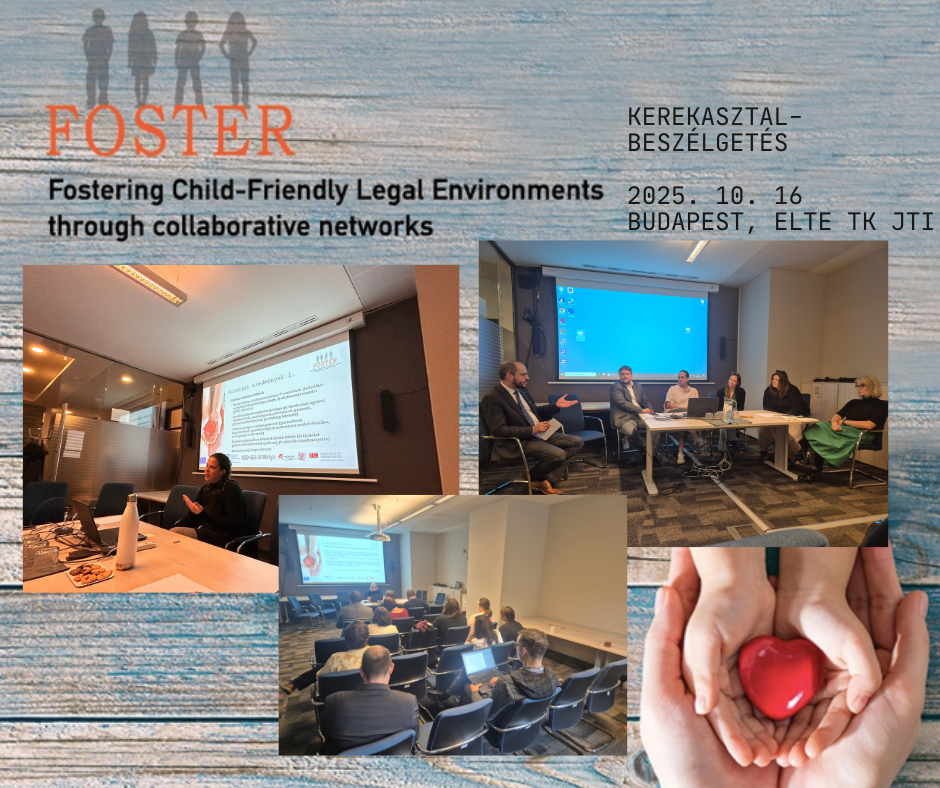
First National Roundtable (16 October 2025)
The opening roundtable introduced the objectives of the FOSTER project and presented the Hungarian Training Needs Assessment. Participants discussed the current challenges of representing child victims and identified priority areas for professional capacity building.
Second National Roundtable (7 November 2025)
This event focused on discussions with members of the judiciary concerning the practical implementation of children's rights and opportunities for improving child-friendly justice within judicial practice.
Third National Roundtable (22 January 2026)
Experts from academia, psychology, legal practice and child protection explored communication with child victims, trauma-informed legal procedures and multidisciplinary cooperation.
Fourth National Roundtable (12 February 2026)
The final Hungarian roundtable examined complex issues surrounding child victims, including forensic psychology, child-sensitive interviewing, medical aspects of child abuse, and practical experiences from victim support services.
International Roundtables
The FOSTER project also organised two international roundtable discussions bringing together experts from Bulgaria, Greece, Hungary and Slovenia.
These events created a platform for exchanging experiences, comparing national legal frameworks and identifying common challenges in protecting child victims of crime. Despite differences between the participating countries, discussions revealed remarkable similarities regarding the practical difficulties faced by legal professionals.
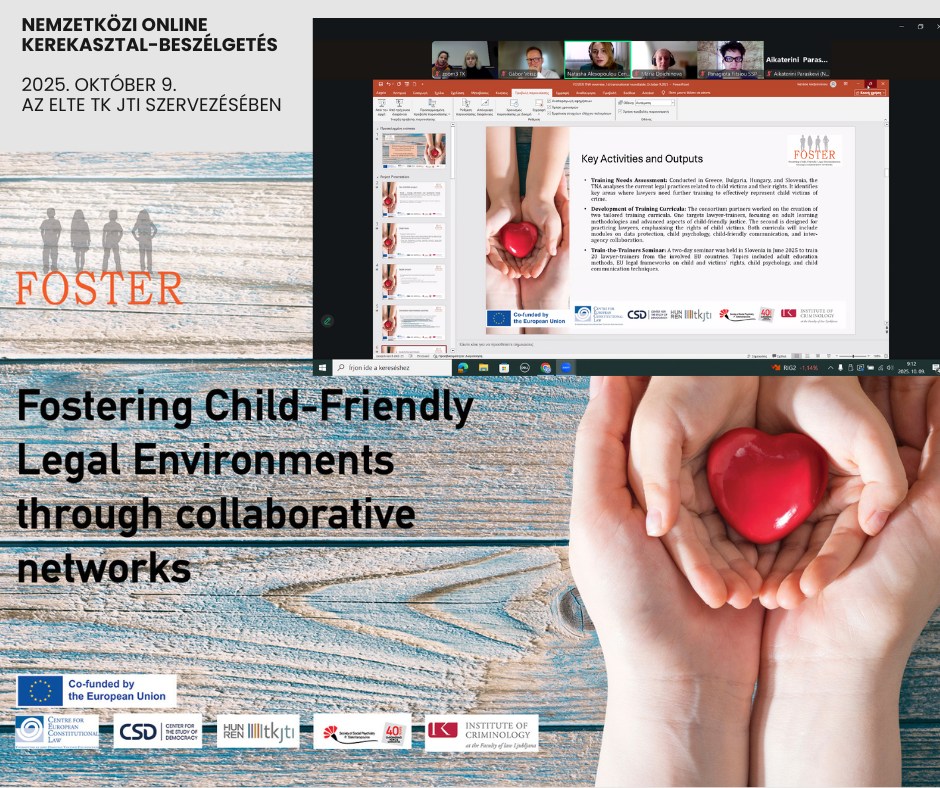
First International Roundtable (9 October 2025)
The first international roundtable focused on identifying the main training needs of lawyers working with child victims.
Participants discussed gaps between legal standards and everyday practice, emphasising the need for specialised professional education, trauma-informed approaches, child-sensitive communication, and stronger multidisciplinary cooperation.
The event laid the foundation for the development of the project's training curriculum, educational materials and practical guidance documents.
Second International Roundtable (11 March 2026)
The second international roundtable concentrated on particularly vulnerable groups of child victims, including children living in institutional care, children with disabilities, migrant children and children experiencing social exclusion.
Experts highlighted that although legal protections generally exist across Europe, practical implementation remains inconsistent. Discussions stressed the importance of improving inter-agency cooperation, strengthening child participation, and ensuring that every child can effectively access justice regardless of their personal circumstances.
Together, the two international roundtables provided valuable comparative insights that informed the project's final recommendations and contributed to strengthening international cooperation in the field of child-friendly justice.
Final Conference
The conference presented the project's main achievements, including the research findings, training programme, e-learning course, practical guides and policy recommendations developed during the two-year implementation period.
Three thematic panel discussions addressed key aspects of child-friendly justice, including the legal protection of child victims, communication with children during legal proceedings, and future directions for improving child-friendly justice systems across Europe.
The conference demonstrated that protecting child victims requires much more than legal reforms alone. Sustainable progress depends on continuous professional education, effective multidisciplinary cooperation, and a shared commitment to respecting children's rights and promoting their well-being throughout justice processes.
Newsletters
Throughout the project, two international newsletters were published summarising the main project activities, milestones and achievements.
The newsletters provide updates on research activities, training programmes, roundtable discussions, international cooperation and the project's final outcomes.
- FOSTER Newsletter No. 1 (June 2025)
- FOSTER Newsletter No. 2 (June 2026)
- FOSTER Newsletter No. 3 (July 2026)
Media Coverage (In Hungarian)
The FOSTER project has attracted considerable public and professional attention through national media coverage highlighting the importance of strengthening child-friendly justice and protecting child victims of crime.
- Euronews: Hogy áll a gyermekkorú áldozatok jogainak védelme Magyarországon?
- Mai Kurir: A gyermekáldozatok jogainak védelme: FOSTER projekt és ajánlások a szakmai együttműködés javítására
- Jogászvilág: Hogy áll a gyermekkorú áldozatok jogainak védelme Magyarországon?
Photo Gallery
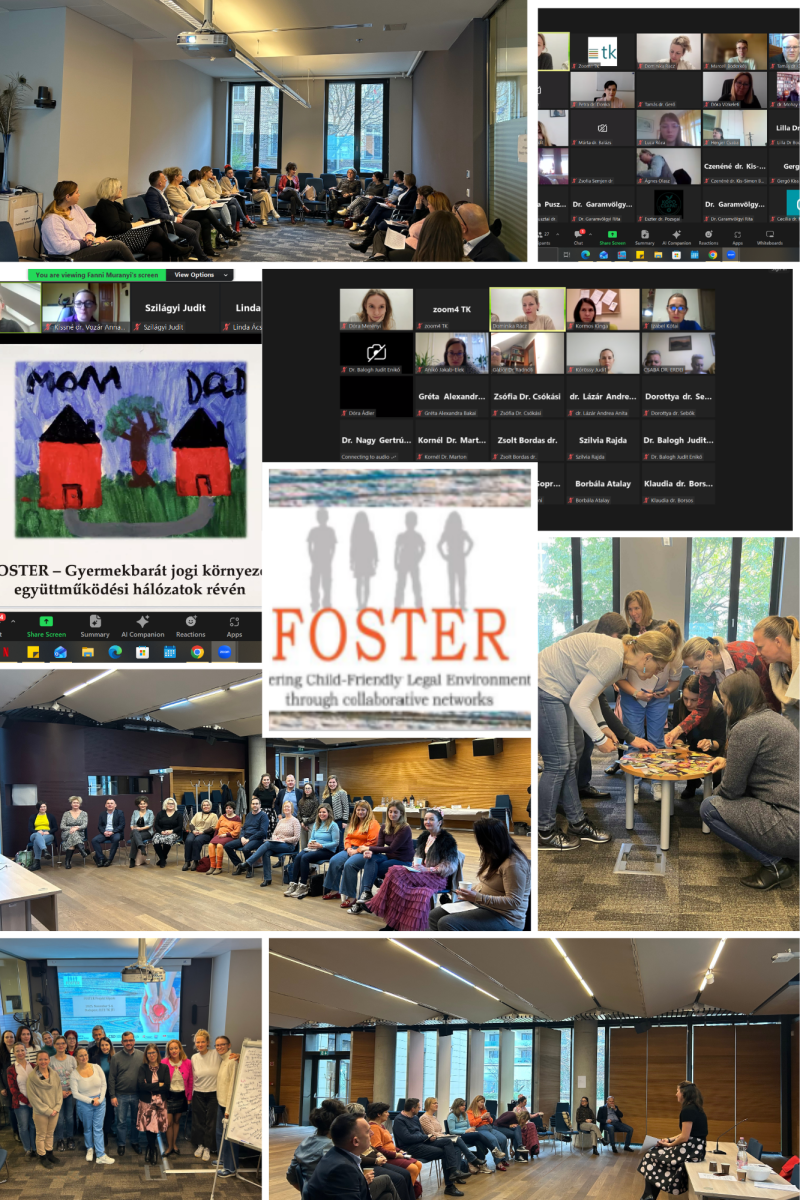
The project gallery presents photographs from the national and international roundtables, professional training sessions, the final conference, and other project events, illustrating the collaborative work carried out throughout the implementation of FOSTER.
.jpg)
.png)
EU Funding
FOSTER – Fostering Child-Friendly Legal Environments through Collaborative Networks is co-funded by the European Union under the Citizens, Equality, Rights and Values (CERV) Programme. Project Number: 101160568 (JUST-2023-JACC-EJUSTICE).
For further information about the project, please contact:
Ágnes Lux (Institute for Legal Studies, Centre for Social Sciences) and Veronika Szontagh (Institute for Legal Studies, Centre for Social Sciences)